
- What Korean language idiom has an interesting story behind it?
- Has the meaning of the idiom changed over time?
The Lion’s Share
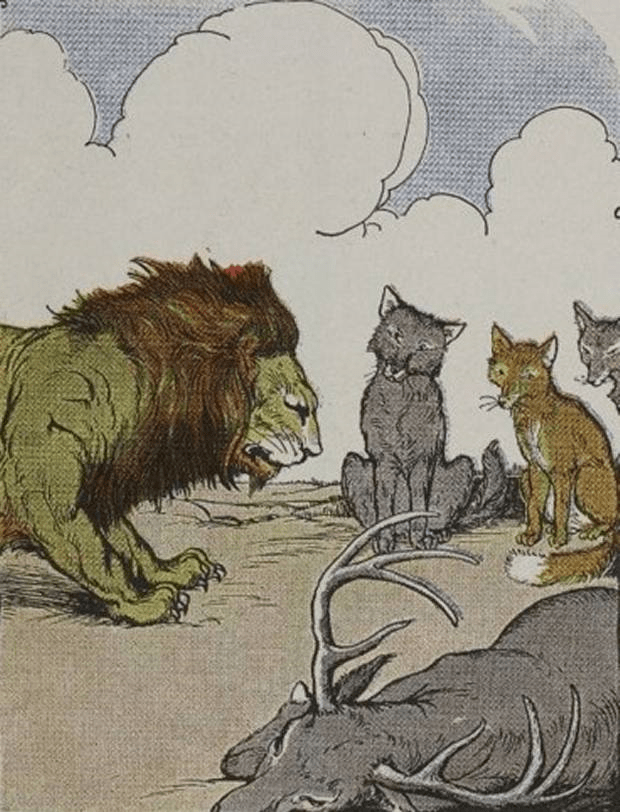
The Lion went hunting along with the Fox, the Jackal, and the Wolf. They hunted and they hunted until at last they surprised a deer and soon took its life. Then came the question how to divide the prize. “Divide for me this deer,” roared the Lion.
So the other animals skinned it and cut it into four parts. Then the Lion took his stand in front of the deer’s meat and pronounced judgment:
“The first quarter is for me in my capacity as King of Beasts; the second is mine as the one who decides; another share comes to me for my part in the chase; and as for the fourth quarter, …well, as for that, I would like to see which of you will dare to lay a paw upon it.”
“Humph,” grumbled the Fox, the Jackal, and the Wolf as they walked away with their tails between their legs, but they grumbled in a low growl.
“You may share the labors of the great, but you will not share the spoil.”
“The lion’s share” is an English language idiom that has come to mean “the biggest portion” or “the biggest share” or “the most” in the sense of when something that is limited in quantity gets divided. The original meaning has drifted over time, but the English language phrase “the lion’s share” definitely had its origin in Aeseop’s fables.
Idiom: “the lion’s share”
Meaning: the biggest portion of something that is divided
Usage: “The lion’s share of (discretionary) government spending goes to the military”

 Joseph English for Kids