

1. Use a comma to separate two independent clauses when they are joined by any of these seven coordinating conjunctions: and, but, or, for, nor, so, yet.
2. DO NOT use a comma to separate a compound predicate (verb), a sentence with one subject and two verbs.
All of the following are correct. Can you spot and explain the differences?
- I went home at 9 p.m. last night. I immediately fell asleep.
- I went home at 9 p.m. last night, and I immediately fell asleep.
- I went home at 9 p.m. last night and immediately fell asleep.
Answers:
- I went home at 9 p.m. last night. I immediately fell asleep.
- These are two complete sentences.
- I went home at 9 p.m. last night, and I immediately fell asleep.
- This is an example of two independent clauses joined by a coordinating conjunction, FANBOYS.
- What is an independent clause?
- An independent clause can stand on its own as a complete sentence.
- Do you remember the rules for a complete sentence?
- An independent clause or complete sentence must have the following:
- Verb
- Subject
- Complete idea
- An independent clause or complete sentence must have the following:
- What is an independent clause?
- This is an example of two independent clauses joined by a coordinating conjunction, FANBOYS.
- I went home at 9 p.m. last night and immediately fell asleep.
- This example sentence has one subject, “I”, and two verbs, “went” and “fell asleep”:
- “I went home last night”
- “immediately fell asleep.”
- DO NOT use a comma to separate the coordinating conjunction for sentences with a compound predicate (verb), a sentence with one subject and two verbs.
- This example sentence has one subject, “I”, and two verbs, “went” and “fell asleep”:
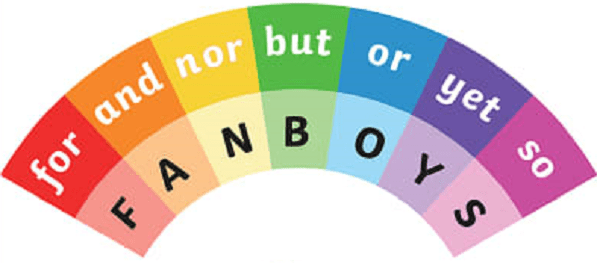
Examples:
- The game was over, and we went home.
- The game was over, but the crowd refused to leave.
- The student explained her question, yet the instructor still didn’t seem to understand.
- Yesterday was her brother’s birthday, so we had a surprise birthday party for him.
Notice the following:
- My grandfather is old. He has the wisdom (지혜) that comes with age.
- My grandfather is old and has the wisdom that comes with age.
- My grandfather is old, and he has the wisdom that comes with age.

 Joseph English for Kids