Journal Writing – Rules & Guidelines

Rules

Rules must be followed. Rules are like laws.

  • When you write your journals, you must do the following:
    1. Write an outline
      • When you write a P.R.E.P. answer, I want to see an outline (in bullet point form) for your ‘R’ (reason) and ‘E’ (examples)
      • When you write a P.R.E.O.P. answer, I want to see an outline (in bullet point form) for your ‘R’ (reason), ‘E’ (examples), and ‘O’ (“on the other hand”, counter-examples)
    2. Write a first draft
    3. Proofread, edit, and rewrite
      • Remember: the single best piece of writing advice to improve writing that you, everyone, can do to improve your writing is to rewrite. Remember, genius rewrites, and you should too.
    4. Write your second (or final) draft

Rules

  • All pronouns must logically point to a noun

Points on style – “style points”

  • Write with verbs
    • English is a verb centered language.   Verbs have energy
  • Do not shift person.
    • Write in the first person for personal, subjective, accounts
    • Write in the third person for academic, objective, writing
    • Write in the second person, often using the imperative mood, for giving instructions or directions
      • Question: Do you think that morality should be taught as a subject at schools?

        “I don’t think I need to learn morality at school because people have morals unless they are psychopaths. And even if you learn morality at school, people don’t become moral. Even if you learn morality, students will be tired of moral classes. So I don’t think I need to learn morality at school.”
  • Do not shift verb tense; stay in the same verb time

    What is “verb tense”? Remember that verbs have two main parts: action and time.
    • When writing in the past, stay in the past

Guidelines

Guidelines are weaker, less strict, than rules, which must be followed. Another idiom for “guideline” is “rule of thumb”. Guidelines and rules of thumb are suggestions for best practices.

“Guideline” comes from woodworking, carpentry. A guideline gives carpenters a path to follow while sawing wood.

  • When sentencing, punishing, criminals, judges almost always follow sentencing guidelines for punishments to fit criminals’ crimes.

“Rule of thumb” comes from a general, not perfect, measurement for an inch, which is roughly the length from the first joint to the tip of a person’s thumb. The term rule of thumb refers to a general way of doing something that, though not always perfect, provides a handy way to complete the task at hand.

  • If you are having computer problems, a good rule of thumb is to restart the computer.

Rules for Using Commas

Comma Use

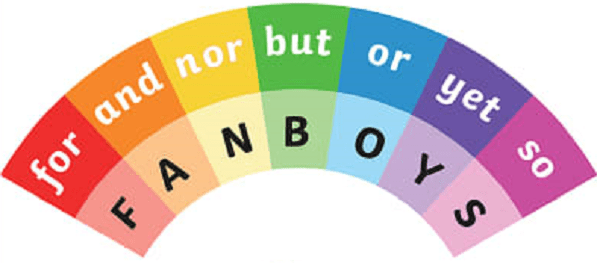
1. Use commas to separate two independent clauses when they are joined by any of these seven coordinating conjunctions: and, but, or, for, nor, so, yet.

  • What is an independent clause?
    • An independent clause can stand on its own as a complete sentence.
  • Do you remember the rules for an independent clause, also known as a complete sentence?
    • An independent clause or complete sentence must have the following:
      1. Verb
      2. Subject
      3. Complete idea

Examples:

  • The game was over, and we went home.
  • The game was over, but the crowd refused to leave.
  • The student explained her question, yet the instructor still didn’t seem to understand.
  • Yesterday was her brother’s birthday, so we had a surprise birthday party for him.

Notice the following:

  • My grandfather is old and wise.
  • My grandfather is old and has wisdom.
  • My grandfather is old, and he is wise.

2. Use commas after introductory a) clauses, b) phrases, or c) words that come before the main clause.

a. Common starter words for introductory clauses that should be followed by a comma include after, although, as, because, if, since, when, while.

While I was eating, the cat scratched at the door.

Because her alarm clock was broken, she was late for class.

If you are ill, you ought to see a doctor.

When the snow stops falling, we’ll shovel the driveway.

However, don’t put a comma after the main clause when a dependent (subordinate) clause follows it (except for cases of extreme contrast).

INCORRECT: The cat scratched at the door, while I was eating.CORRECT: She was still quite upset, although she had won the Oscar. (This comma use is correct, because it is an example of extreme contrast.)

b. Common introductory phrases that should be followed by a comma include participial and infinitive phrases, absolute phrases, nonessential appositive phrases, and long prepositional phrases (over four words).

Having finished the test, he left the room.

To get a seat, you’d better come early.

After the test but before lunch, I went jogging.

The sun radiating intense heat, we sought shelter in the cafe.

c. Common introductory words that should be followed by a comma include yes, however, well.

Well, perhaps he meant no harm.

Yes, the package should arrive tomorrow morning.

However, you may not be satisfied with the results.

3. Use a pair of commas in the middle of a sentence to set off clauses, phrases, and words that are not essential to the meaning of the sentence. Use one comma before to indicate the beginning of the pause and one at the end to indicate the end of the pause.

Here are some clues to help you decide whether the sentence element is essential:

  • If you leave out the clause, phrase, or word, does the sentence still make sense?
  • Does the clause, phrase, or word interrupt the flow of words in the original sentence?
  • If you move the element to a different position in the sentence, does the sentence still make sense?

If you answer “yes” to one or more of these questions, then the element in question is nonessential and should be set off with commas. Here are some example sentences with nonessential elements:

Clause: That Tuesday, which happens to be my birthday, is the only day when I am available to meet.

Phrase: This restaurant has an exciting atmosphere. The food, on the other hand, is rather bland.

Word: I appreciate your hard work. In this case, however, you seem to have over-exerted yourself.

4. Do not use commas to set off essential elements of the sentence, such as clauses beginning with that (relative clauses). That clauses after nouns are always essential. That clauses following a verb expressing mental action are always essential.

  • That clauses after nouns:
    • The book that I borrowed from you is excellent.
    • The apples that fell out of the basket are bruised.
  • That clauses following a verb expressing mental action:
    • She believes that she will be able to earn an A.
    • He is dreaming that he can fly.
    • I contend that it was wrong to mislead her.
    • They wished that warm weather would finally arrive.
  • Examples of other essential elements (no commas):
    • Students who cheat only harm themselves.
    • The baby wearing a yellow jumpsuit is my niece.
    • The candidate who had the least money lost the election.
  • Examples of nonessential elements (set off by commas):
    • Fred, who often cheats, is just harming himself.
    • My niece, wearing a yellow jumpsuit, is playing in the living room.
    • The Green party candidate, who had the least money, lost the election.
    • Apples, which are my favorite fruit, are the main ingredient in this recipe.
    • Professor Benson, grinning from ear to ear, announced that the exam would be tomorrow.
    • Tom, the captain of the team, was injured in the game.
    • It is up to you, Jane, to finish.
    • She was, however, too tired to make the trip.
    • Two hundred dollars, I think, is sufficient.

5. Use commas to separate three or more words, phrases, or clauses written in a series.

  • The Constitution establishes the legislative, executive, and judicial branches of government.
  • The candidate promised to lower taxes, protect the environment, reduce crime, and end unemployment.
  • The prosecutor argued that the defendant, who was at the scene of the crime, who had a strong revenge motive, and who had access to the murder weapon, was guilty of homicide.

6. Use commas to separate two or more coordinate adjectives that describe the same noun. Be sure never to add an extra comma between the final adjective and the noun itself or to use commas with non-coordinate adjectives.

Coordinate adjectives are adjectives with equal (“co”-ordinate) status in describing the noun; neither adjective is subordinate to the other. You can decide if two adjectives in a row are coordinate by asking the following questions:

  • Does the sentence make sense if the adjectives are written in reverse order?
  • Does the sentence make sense if the adjectives are written with and between them?

If you answer yes to these questions, then the adjectives are coordinate and should be separated by a comma. Here are some examples of coordinate and non-coordinate adjectives:

He was a difficult, stubborn child. (coordinate)They lived in a white frame house. (non-coordinate)She often wore a gray wool shawl. (non-coordinate)Your cousin has an easy, happy smile. (coordinate)

The 1) relentless, 2) powerful 3) summer sun beat down on them. (1-2 are coordinate; 2-3 are non-coordinate.)

The 1) relentless, 2) powerful, 3) oppressive sun beat down on them. (Both 1-2 and 2-3 are coordinate.)

7. Use a comma near the end of a sentence to separate contrasted coordinate elements or to indicate a distinct pause or shift.

  • He was merely ignorant, not stupid.
  • The chimpanzee seemed reflective, almost human.
  • You’re one of the senator’s close friends, aren’t you?
  • The speaker seemed innocent, even gullible.

8. Use commas to set off phrases at the end of the sentence that refer to the beginning or middle of the sentence. Such phrases are free modifiers that can be placed anywhere in the sentence without causing confusion. (If the placement of the modifier causes confusion, then it is not “free” and must remain “bound” to the word it modifies.)

Nancy waved enthusiastically at the docking ship, laughing joyously. (correct)

INCORRECT: Lisa waved at Nancy, laughing joyously. (Who is laughing, Lisa or Nancy?)Laughing joyously, Lisa waved at Nancy. (correct)Lisa waved at Nancy, who was laughing joyously. (correct)

9. Use commas to set off all geographical names, items in dates (except the month and day), addresses (except the street number and name), and titles in names.Birmingham, Alabama, gets its name from Birmingham, England.July 22, 1959, was a momentous day in his life. Who lives at 1600 Pennsylvania Avenue, Washington, DC?Rachel B. Lake, MD, will be the principal speaker.

(When you use just the month and the year, no comma is necessary after the month or year: “The average temperatures for July 1998 are the highest on record for that month.”)

10. Use a comma to shift between the main discourse and a quotation.

John said without emotion, “I’ll see you tomorrow.”

“I was able,” she answered, “to complete the assignment.”

In 1848, Marx wrote, “Workers of the world, unite!”

11. Use commas wherever necessary to prevent possible confusion or misreading.

To George, Harrison had been a sort of idol.

Comma abuse

Commas in the wrong places can break a sentence into illogical segments or confuse readers with unnecessary and unexpected pauses.

12. Don’t use a comma to separate the subject from the verb.

INCORRECT: An eighteen-year-old in California, is now considered an adult.

INCORRECT: The most important attribute of a ball player, is quick reflex actions.

13. Don’t put a comma between the two verbs or verb phrases in a compound predicate.

INCORRECT: We laid out our music and snacks, and began to study.

INCORRECT: I turned the corner, and ran smack into a patrol car.

14. Don’t put a comma between the two nouns, noun phrases, or noun clauses in a compound subject or compound object.

INCORRECT (compound subject): The music teacher from your high school, and the football coach from mine are married.

INCORRECT (compound object): Jeff told me that the job was still available, and that the manager wanted to interview me.

15. Don’t put a comma after the main clause when a dependent (subordinate) clause follows it (except for cases of extreme contrast).INCORRECT: The cat scratched at the door, while I was eating.CORRECT: She was still quite upset, although she had won the Oscar. (This comma use is correct, because it is an example of extreme contrast)
Comma Usage – Dependent and Independent Clauses Joined by Coordinating Conjunctions

1. Use a comma to separate two independent clauses when they are joined by any of these seven coordinating conjunctions: and, but, or, for, nor, so, yet.

2. DO NOT use a comma to separate a compound predicate (verb), a sentence with one subject and two verbs.

All of the following are correct. Can you spot and explain the differences?

  • I went home at 9 p.m. last night. I immediately fell asleep.
  • I went home at 9 p.m. last night, and I immediately fell asleep.
  • I went home at 9 p.m. last night and immediately fell asleep.

Answers:

  • I went home at 9 p.m. last night. I immediately fell asleep.
    • These are two complete sentences.
  • I went home at 9 p.m. last night, and I immediately fell asleep.
    • This is an example of two independent clauses joined by a coordinating conjunction, FANBOYS.
      • What is an independent clause?
        • An independent clause can stand on its own as a complete sentence.
        • Do you remember the rules for a complete sentence?
          • An independent clause or complete sentence must have the following:
            1. Verb
            2. Subject
            3. Complete idea
  • I went home at 9 p.m. last night and immediately fell asleep.
    • This example sentence has one subject, “I”, and two verbs, “went” and “fell asleep”:
      1. “I went home last night”
      2. “immediately fell asleep.”
    • DO NOT use a comma to separate the coordinating conjunction for sentences with a compound predicate (verb), a sentence with one subject and two verbs.
Examples:
  • The game was over, and we went home.
  • The game was over, but the crowd refused to leave.
  • The student explained her question, yet the instructor still didn’t seem to understand.
  • Yesterday was her brother’s birthday, so we had a surprise birthday party for him.
Notice the following:
  • My grandfather is old. He has the wisdom (지혜) that comes with age.
  • My grandfather is old and has the wisdom that comes with age.
  • My grandfather is old, and he has the wisdom that comes with age.

Appositive Practice

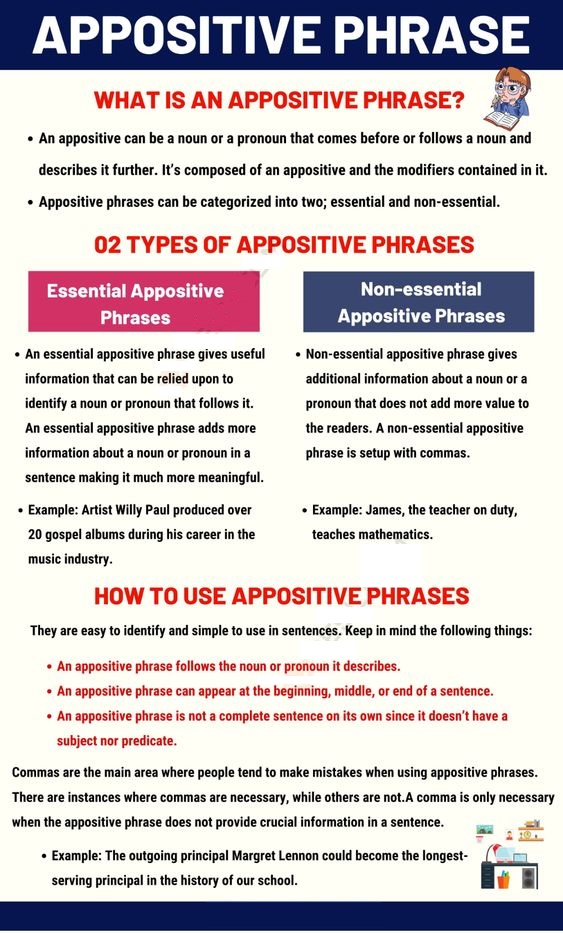
An appositive is a noun or noun phrase that renames another noun right beside it. The appositive can be a short or long combination of words.

Look at these appositive examples, all of which rename “dog”:

  1. Find the appositives
  2. What part of speech (n., v., adj., adv) are they and what part of speech are they replacing?
    • My dog, a golden retriever, is my best friend.
    • My dog, “Cinnamon”, is my best friend.
    • My dog, a golden retriever, a dog bred for working and hunting is my best friend.
    • My dog, our family pet, is truly man’s, specifically my, best friend.
    • My dog, a four-year old golden retriever, is truly man’s, specifically my, best friend.
Essential appositive phrases (defining) and non-essential appositive phrases (non-defining, extra detail)
  1. Read the following carefully. What is the difference?
  2. Now listen to me or read the sentences aloud. Can you hear the difference?
  3. What is the difference in meaning?
  • My younger brother who went to UConn, the University of Connecticut, is now a lawyer.
  • My younger brother, who went to UConn, the University of Connecticut, is a lawyer.
  • Rice is literally served at every meal, breakfast, lunch, and dinner, in Korea. The idiom, the way people ask you (for example, “what do you do?” for “what is your job?” in English) for “have you eaten today?” literally translates to “have you had rice today?” That’s how rice is so inextricably woven into the fabric of the culture, everyday life in Korea.

    They definitely know how to make rice here, in Korea, and every home, even a university student’s one room apartment, has a rice maker, a sort of pressure cooker for rice. I ate more rice in my first three months here than I had eaten in the previous 30 years, my whole life in the U.S.

    If I go too long without drinking milk, my body, even to my soul, just doesn’t feel right. My wife said that while she lived in London that she noticed the same, that her body felt strange, without eating rice.
  • My grandmother, once young with her whole life ahead of her, has had more yesterdays than she will have tomorrows.
  • My grandmother, my mother’s mother, was born in Ireland.
  • My grandmother, my father’s mother, was born in Italy.
  • My car
    • My car, a white Hyundai Avante, is reliable.
    • My car, a four-door “dad mobile”, is a good family car.
    • I’ve had my car, a 10 year-old car that I bought used, for five years.
    • My car, a plain gasoline engine sedan, runs well.
Find the appositives – “My Grandmother”

My grandmother, my mother’s mother and an Irish immigrant, had four children, Robert, Nancy, Richard, and Linda. Robert, the oldest and called “Bob”, became a priest. Nancy, my mother, had five children. Richard, the younger son, lives in Florida. Linda, the youngest, the baby of the family, is now a grandmother.

  • How many people?
    • My grandmother, my mother’s mother and an Irish immigrant, had four children.
    • My grandmother, my mother’s mother, and an Irish immigrant, had four children.
      • What’s the lesson? BE CAREFUL !
  • What’s the difference?
    • My sister who graduated from UConn, the University of Connecticut, is smart.
    • My sister, who graduated from UConn, the University of Connecticut, is smart.
      • Hint: one is “defining” and the other is “an extra detail”. How does defining vs. extra detail change the meaning, at least the feeling, of the sentence?
Appositive Writing Practice
  • January, _______, is my favorite month.
    • a fresh beginning
    • ______________
  • February, _______, is my favorite month.
    • the shortest month
    • ______________
  • March, _______, is my favorite month.
    • the start of the new school year
    • ______________
  • April, _______, is my favorite month.
    • the beginning of baseball season
    • a time when all baseball teams have hope
    • ______________
  • May, _______, is my favorite month.
    • when flowers bloom
    • ______________
  • June, _______, is my favorite month.
    • my birth month
    • ______________
  • July, _______, is my favorite month.
    • the start of beach season
    • when Korean schools start summer vacation
    • ______________
  • August, _______, is my favorite month.
    • Korea’s hottest month
    • ______________
  • September, _______, is my favorite month.
    • harvest time before Chuseok
    • ______________
  • October, _______, is my favorite month.
    • the time leaves change color
    • ______________
  • November, _______, is my favorite month.
    • the quiet time before Christmas
    • ______________
  • December, _______, is my favorite month.
    • Christmas holiday season
    • a time when Christmas music fills the air
    • ______________
  • January, _______, is my least favorite month.
  • February, _______, is my least favorite month.
  • March, _______, is my least favorite month.
  • April, _______, is my least favorite month.
  • May, _______, is my least favorite month.
  • June, _______, is my least favorite month.
  • July, _______, is my least favorite month.
  • August, _______, is my least favorite month.
  • September, _______, is my least favorite month.
  • October, _______, is my least favorite month.
  • November, _______, is my least favorite month.
  • December, _______, is my least favorite month.
  • Korea’s hottest month Korea’s coldest month
  • my birth month
  • the rainiest month peak monsoon season
  • Christmas season the start of the new year
  • four weeks of summer vacation
  • the start of baseball season
  • the time with trees at their most colorful
  • the best time to ____
    • swim ski fly kites
    • go apple picking
  • when my family
    • takes a winter vacation
    • takes a summer vacation
    • makes kimchi
    • plants rice and vegetables
    • picks rice and vegetables

The Lion’s Share

  1. What Korean language idiom has an interesting story behind it?
  2. Has the meaning of the idiom changed over time?

The Lion’s Share

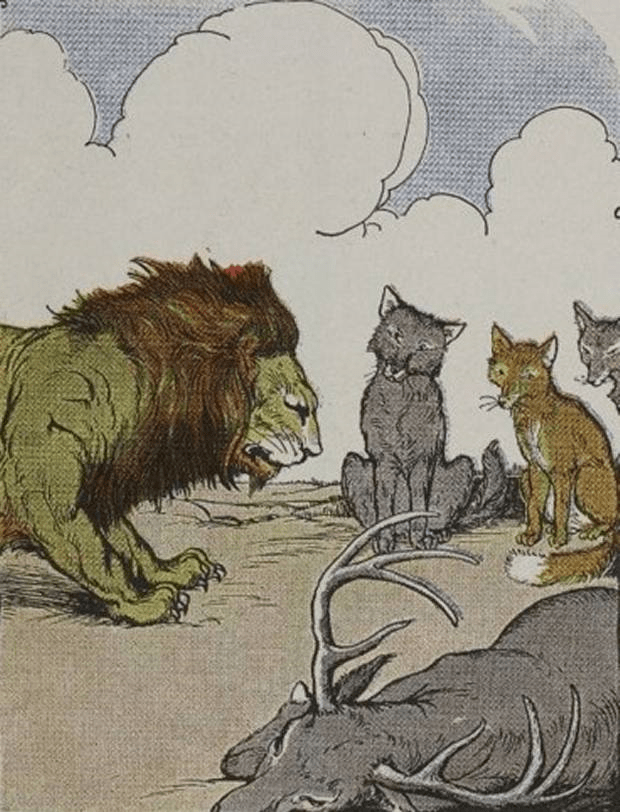
The Lion went hunting along with the Fox, the Jackal, and the Wolf. They hunted and they hunted until at last they surprised a deer and soon took its life. Then came the question how to divide the prize. “Divide for me this deer,” roared the Lion.

So the other animals skinned it and cut it into four parts. Then the Lion took his stand in front of the deer’s meat and pronounced judgment:

“The first quarter is for me in my capacity as King of Beasts; the second is mine as the one who decides; another share comes to me for my part in the chase; and as for the fourth quarter, …well, as for that, I would like to see which of you will dare to lay a paw upon it.”

“Humph,” grumbled the Fox, the Jackal, and the Wolf as they walked away with their tails between their legs, but they grumbled in a low growl.

“You may share the labors of the great, but you will not share the spoil.”

“The lion’s share” is an English language idiom that has come to mean “the biggest portion” or “the biggest share” or “the most” in the sense of when something that is limited in quantity gets divided. The original meaning has drifted over time, but the English language phrase “the lion’s share” definitely had its origin in Aeseop’s fables.

Idiom: “the lion’s share”
Meaning: the biggest portion of something that is divided
Usage: “The lion’s share of (discretionary) government spending goes to the military”

…the lion’s share

The Three Questions

  • When is the most important time?
  • Who is the most important person?
  • What is the most important thing to do?

Three Questions
by Leo Tolstoy

(“The Three Questions” is a short story by Russian author Leo Tolstoy first published in 1885 as part of the collection What Men Live By, and Other Tales. The story takes the form of a parable, and it concerns a king who wants to find the answers to what he considers the three most important questions in life. This post’s featured image is a 1916 cover illustration by Michael Sevier.)

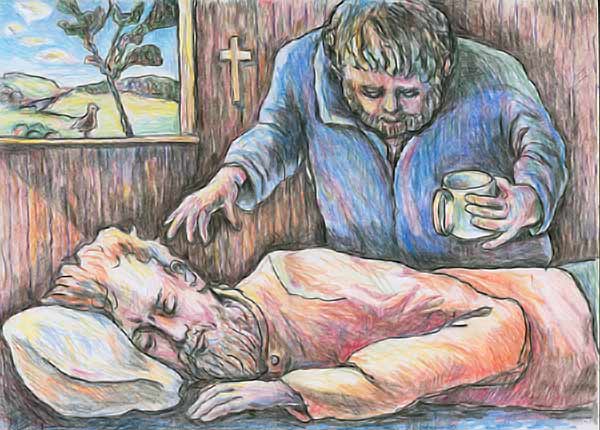
The Three Questions – 1916 Cover Illustration by Michael Sevier

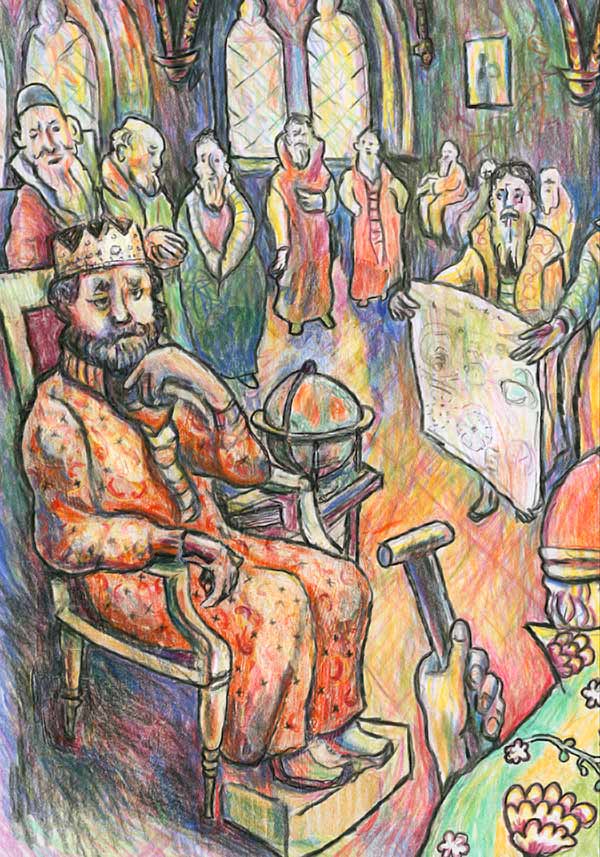
A certain king once had a revelation. If he always knew the right time to begin everything, if he knew the right people to listen to and wrong to avoid, and above all, if he always knew the most important thing to do, he would never fail in anything he might do.

He proclaimed throughout his kingdom that he would reward anyone who could teach him when was the right time for every action, who were the most necessary people, and what was the most important thing to do.

Scholars came to the King, but they all answered his questions differently.

Replying to the King’s first question, some said that to know the right time for every action, one must draw up in advance a table of days, months, and years and must live strictly by it. Only by scheduling could everything be done at its proper time. Others declared that deciding beforehand the right time for every action was impossible, but by not letting oneself be absorbed in idle pastimes, one could always attend to all of the days’ demands and then do what was needed most. Still others said that no matter how attentive the King might be to each day’s demands, deciding the right time for every action was impossible for one man. The King should have a Council of Wise Men help him set the proper time for all activities.

Then still others said some days’ demands could not wait to be laid before a council. One had to decide immediately whether to undertake them, and in order to decide, one must know beforehand what would result. Only magicians know beforehand. Therefore, one must consult magicians.

Answers to the second question were as disparate. Some said the people the King most needed were his councilors. Others said his priests. Still others said his doctors. Some said his warriors were the most necessary.

For the third question – what was the most important occupation? – some replied science. Others said skill in warfare, and others replied religious worship.

Offered differing answers, the King agreed with none and gave the reward to no one. Still wishing to find the right answers to his questions, the King decided to consult a hermit known for his wisdom.

The hermit lived in woods, which he never left, and received only common folk. Wearing simple clothes and before reaching the hermit’s hold, the King dismounted from his horse. Leaving his bodyguard behind, he went on alone.

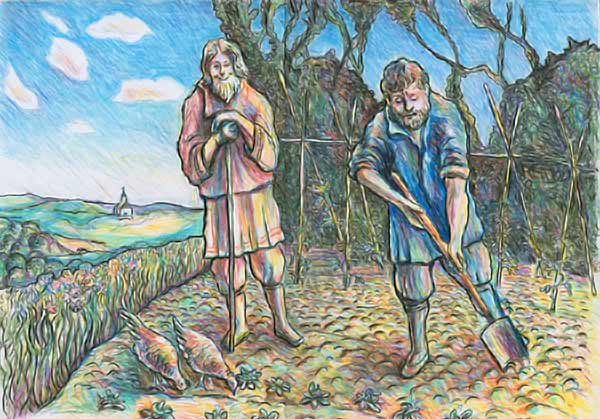
When the King approached, the hermit was tilling the ground before his hut. Not recognizing the disguised King, the hermit, frail and weak, greeted him and went on tilling. Each time the hermit stuck his spade into the ground and turned a little earth, he breathed heavily.

The King approached the hermit. “I have come to you to ask you to answer three questions, wise hermit. How can I know to do the right thing at the right time? Who are the people I need most and to whom should I, therefore, pay most attention to? What affairs are most important and need my first attention?”

The hermit listened and said nothing. He spat on his hands and continued digging.

“You are tired. Let me take the spade and work for you for awhile,” said the King.

“Thank you”, said the hermit. Having handed the spade to the King, the hermit rested on the ground.

After he had dug two beds, the King stopped and repeated his questions. The hermit listened and again gave no answer. The hermit rose and motioned for the spade. “Rest and let me work the soil for awhile.”

But the King did not give him the spade and continued tilling the soil. An hour passed, and then another. The sun sank behind the trees. The King at last struck the spade into the ground and said “I came to you, wise man, for an answer to my questions. If you can’t give me one, tell me. I will return home.”

“Here comes someone running,” the hermit said.  “Let’s see who he is.”

The King turned around and saw a bearded man come running out of the woods. The man held his hands, blood flowing from beneath, pressed against his stomach. Reaching the King, he feebly fell and groaned on the ground. The King and the hermit unfastened the man’s clothing. The man had a large gash in his stomach. The King washed and bandaged the wound as best he could with his handkerchief. The blood would not stop flowing. The King repeatedly removed the blood soaked bandage, washing and redressing the wound. When at last his bleeding stopped, the man revived and asked for something to drink. The King drew and gave fresh water to him.

Meanwhile the sun set, and the evening became cool. With the hermit’s help, the King carried the hurt man into the hermit’s hut and laid him on the bed. Lying on the bed, the man closed his eyes and rested. The King, tired from his walk and his long day’s work, lay down in the doorway and fell asleep so soundly that he slept through the short summer night.

Upon awaking in the morning, the King needed time before he could remember where he was and who was the strange bearded man, gazing intently at him with shining eyes, lying on the bed.

The bearded man saw that the King was awake and looking at him. “Forgive me,” he said in a weak voice.

“I do not know you and have no offense to forgive you for,” said the King.

“You do not know me, but I know you. I am the enemy who swore to revenge himself on you because you executed his brother and seized his property. I knew you had gone alone to see the hermit. I resolved to kill you on your way back. When the day passed and you had not returned, I set out from my ambush to find you. I came upon your bodyguard, and they wounded me. I escaped with my life. I would have bled to death if you had not bandaged my wound. I wished to kill you, but you saved me. Now if I live and you desire it, I will faithfully serve you and bid my sons to do the same. Forgive me.”

The King was happy to make peace with an enemy and have him as a friend. He forgave and told him that he would send his servants and physician to attend to him. The King promised to restore the beaded man’s property.

Leaving the wounded man, the King went onto the porch, looking for the hermit. The hermit, outside and on his knees, sowed seeds in the beds that they had dug the day before.

The King approached him and pleaded for answers to his questions. “For the last time, I pray you to answer my questions, wise man.”

“You have your answers,” said the hermit, sowing seeds on his aged knees and looking up at the King standing before him.

“I ‘have my answers’?” echoed the bewildered King. “What do you mean?”

“Don’t you see?” replied the hermit.

“If you had not pitied me for my weakness yesterday, had not dug those beds for me, and had gone your way, that man would have attacked you. You would have paid dearly for not having stayed with me. So the most important time was when you were tilling the soil. I was the most important man. Doing good for me was your most important business.”

“Afterwards, when that man ran to us, the most important time was when you were attending to him. If you had not bandaged his wounds, he would have died without having made peace with you. He was the most important man. The good you did for him was your most important business.”

“Remember then, there is only one time that is important – now! ‘Now’ is the most important time because ‘now’ is the only time when we have any power. The most important man is whomever you are with. No man knows whether he will ever have dealings with anyone else. The most important business is doing good for whom you are with because for that purpose alone was man sent into this life.”


Three Questions was first published in 1885 as part of Tolstoy’s collection, What Men Live By, and Other Tales. “There is only one time that is important—Now! It is the most important time because it is the only time when we have any power.”


Writing Topics

If you want to be a writer or just want to write better, then you need to write everyday. You can write on anything and about anything. Write whatever you want, whatever strikes your fancy.

Write about your dreams or nightmares. Write about your day’s successes or failures. Write about what you saw or wish you had not seen or wish to see. Write on anything special for that day. Use my Special Suggestions for Any Given Day. Write about my standby topics, TIL, Gratitude, or Contribution.

Special Suggestions for any given day

  • For Daily writing topics see here: Class writing topics.
  • December 27, 2019 – What is your New Year’s resolution?

    A resolution is a promise to one’s self. Many people make New Year’s resolutions, a promise to themselves to do or not do something to improve themselves in the new year. Most people will fail in their resolution before the end of January. What is your New Year’s resolution and how much does it mean to you?
  • December 18,2019 – If you could give someone a meaningful gift for Christmas, what would you want to give to whom, and why?
  • December 13, 2019 – People ask themselves “what do I want?” People should ask themselves, “what do I need to do to get what I want?”

    What do you need to do to get what you want?
  • December 11, 2019 – What action can you take today to improve yourself?
  • December 6, 2019 – Who do you want for a mentor?
  • December 3, 2019 – Who is your hero? Whom do you admire / want to be like?
  • November 29, 2019 – How do YOU make ramyeon?
    • Everyone has a special way to make ramyeon. How do you make ramyeon?
  • November 27, 2019 – What have you learned that you think everyone should know?

Suggestions for Any Day and Everyday

I want to think about these topics everyday. I want take care of my mind and my soul, and I want a sense of contribution in life. I want to write about the following. You should too.

  • TIL – Today I learned: What did I learn today? (mind)
  • Gratitude – What am I thankful for? (spirit / soul /happiness)
  • What good did I do today? (contribution)

“You find what you’re looking for”

Me, in my brief moment of insight.

TIL – Today I Learned

We learn things everyday or we should. If you think that you didn’t learn anything today, then you think that because you didn’t pay attention. If you went home everyday knowing that you would be excited to tell your father or write in your journal “Today I learned…”, then you would look for and find something interesting to tell your father …or write in your journal.

Gratitude

Be specific. You’ll experience more gratitude when you consciously and deliberately bring to mind the thousands of hours of effort your mother has put into raising you, the fact that she wants the best for you, and the little things she did for you than when you simply say that you’re grateful for your mother.

“Being specific is effective for two reasons,” writes Emmons in his book Gratitude Works! “First, it helps us avoid gratitude fatigue. The more discrete the elements, the less we will cease to recognize them or take any one of them for granted.”

Good writing is specific. Good writing is concrete. Good writing lies not in ideas but in examples. Be thankful for small things and write about them in detail.

What good did I do today?

Benjamin Franklin started his journal each morning with “what good will I do today” and ended his journal every night with “what good did I do today?” Simply asking the question focused his attention. “The question is the answer” ~ Me, in my other brief moment of insight.

“The question is the answer”

Me, in my other brief moment of insight.

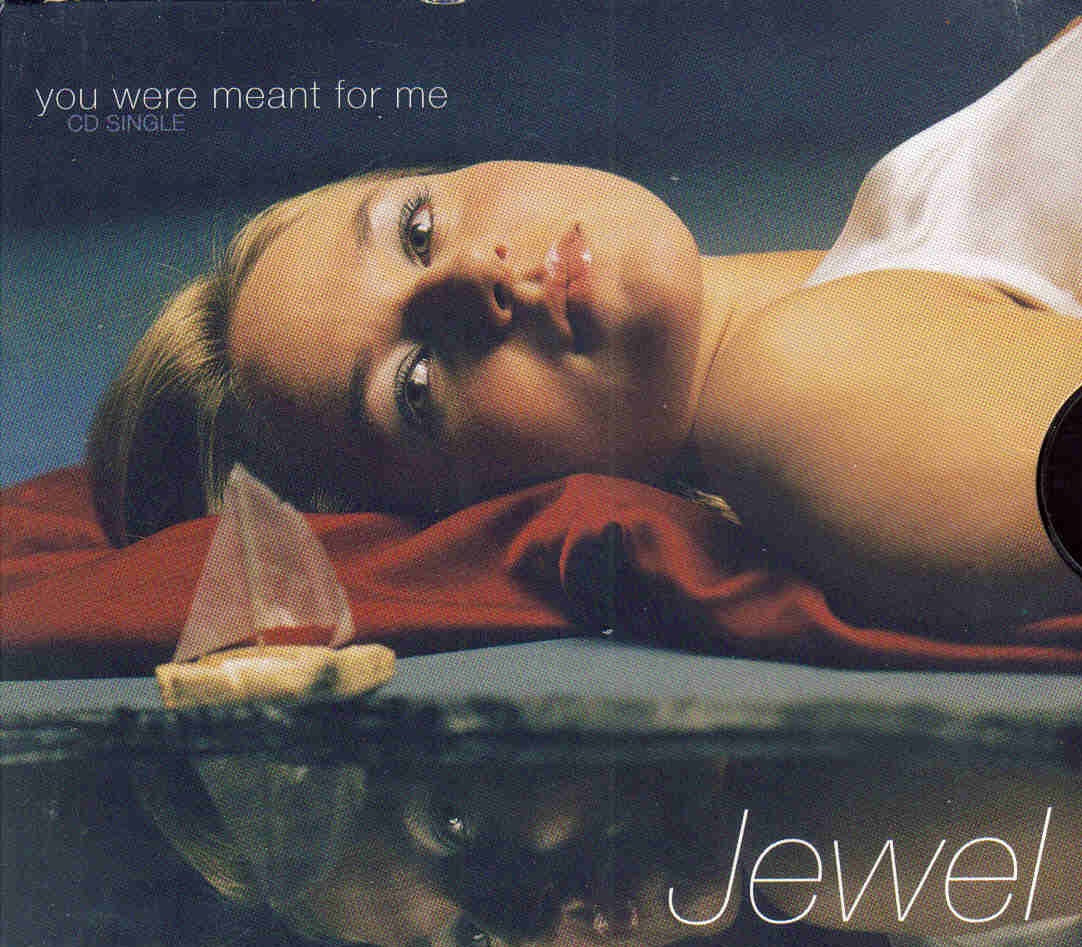
Song: You Were Meant For Me

Singer/songwriter Jewel wrote You Were Meant For Me as a teenager and recorded the song when she was 20. The original music video won the award for Best Female Video at the 1997 MTV Video Music Awards.

“You Were Meant For Me”

I hear the clock, it’s six A.M.
I feel so far from where I’ve been
I got my eggs, I got my pancakes too
I got my maple syrup
, everything but you.

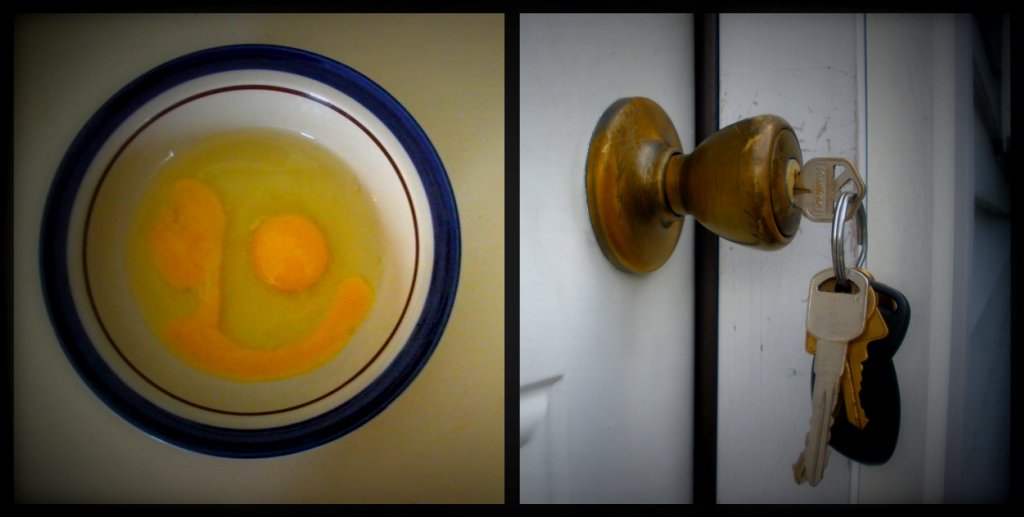
Got my pancakes, break the yolks and make a smiley face. I don’t leave my keys in the door anymore.

I break the yolks and make a smiley face
I kinda like it in my brand new place
Wipe the spots off of the mirror
Don’t leave my keys in the door
I never put wet towels on the floor anymore
’cause

Dreams last so long
Even after you’re gone
I know that you love me
And soon you will see
You were meant for me
And I was meant for you.

I called my mamma, she was out for a walk
Consoled a cup of coffee but it didn’t wanna talk
So I picked up the paper, it was more bad news
More hearts bein’ broken, more people being used

Put on my coat in the pouring rain
I saw a movie it just wasn’t the same
‘Cause it was happy or I was sad

And it made me miss you oh so bad
’cause

Dreams last so long
Even after you’re gone
I know that you love me
And soon you will see
You were meant for me
And I was meant for you.

I go about my business, I’m doing fine
Besides what would I say if I had you on the line?
Same old story, not much to say
Hearts are broken, every day.

I brush my teeth, I put the cap back on
I know you hate it when I leave the light on
I pick a book up and then I turn the sheets down.
And then I take a deep breath and a good look around

Put on my pj’s and hop into bed
I’m half alive but I feel mostly dead

I try and tell myself it’ll all be alright
I just shouldn’t think anymore tonight
’cause

Dreams last so long
Even after you’re gone
I know that you love me
And soon you will see
You were meant for me
And I was meant for you.

Yeah, you were meant for me and I was meant for you.


  1. Is this good writing? Give a PREP answer.
    • Do you see punctuation problems?
    • How do we fix them?
  2. Do these lyrics follow PREP?
  3. What is she saying?
  4. Do you believe her?

You Were Meant For Me, official music video:

Design a site like this with WordPress.com
Get started